WHAT'S HAPPENING WITH OUR PETS?
When your dogs walk in, play on and roll around on a pesticide-treated lawn, they’re continuously picking up what-
ever residues remain on the grass from chemical lawn treatments. As dogs sweat through their feet, it’s easy for them topick up and absorb these products.
While we might think the rain will wash these poisons away-they, in fact, form an aerosol herbicide-rich mist
several feet up from the ground. This is all absorbed into dogs’ sinus cavities, respiratory systems and skin. This will happen whenever it rains for weeks following the application of the
lawn treatment. Our dogs run through this mist, inhaling these proven carcinogenic products.
Wind can also carry these chemicals up to 50 feet from where they’re applied. Considering our dogs “hoover” the ground as they walk, they get even more of these chemicals in their sinus cavities. Knowing this, chewing on the grass takes on a whole new meaning.
Our dog’s
exposure to these chemicals occurs through ingestion (fetching toys and digging in the grass), inhalation (through the mist and sniffing) and transdermally (through their paws, jowls and skin).
It’s not even a maybe they pick them up on a bad day type scenario. These toxic lawn chemicals are in their systems. A study
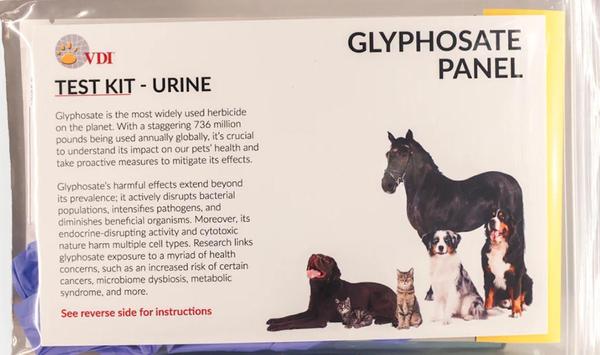
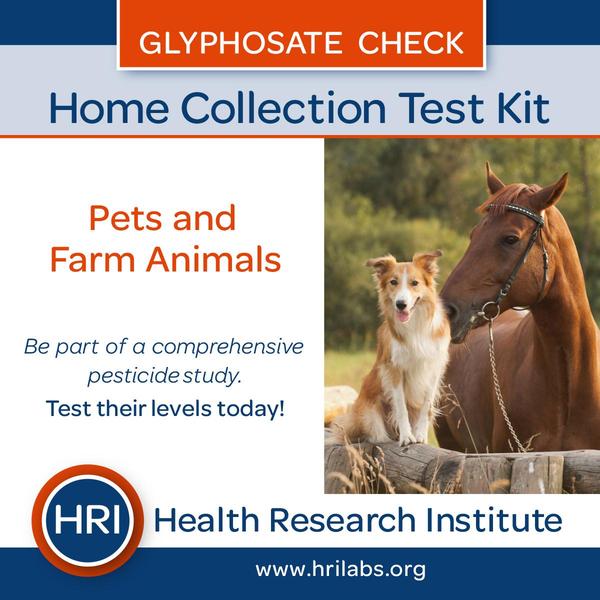
published in the Science of the Total Environment found that the incidence of lawn chemicals in dogs’ urine was widespread – even among dogs in households wherechemicals were not applied. Untreated lawns get contaminated through drift and dogs can be exposed to chemicals during walks. Remember that these chemicals get tracked into the house and contaminate flooring and furniture for everyone in the home.
Glyphosate is commonly sprayed in lakes and on the ground in parks, the lakes running off into the streams and rivers that your dog plays in.
DOES
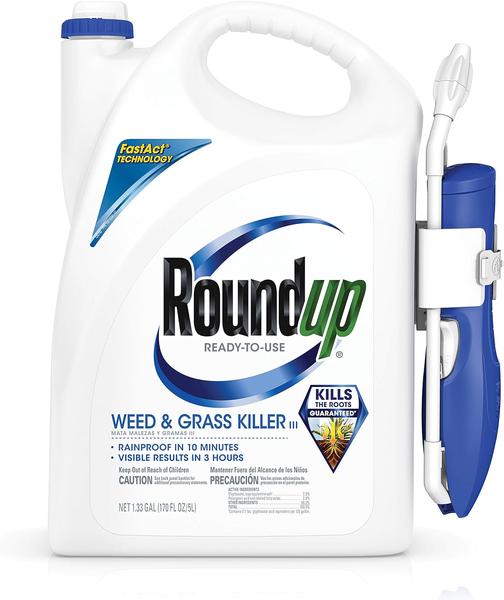
ROUNDUP JUST GO AWAY LIKE THEY SAY? THE ANSWER IS 'NO'
While some literature suggests keeping your dogs away from treated areas for the duration of package label recommenda-
tions or even at least 48 hours, I strongly
believe that this is misleading.
Glyphosate does not dissipate speedily. It lingers in the soil well beyond a month, or even years.
The
Extension Toxicity Network at Oregon State University reports that glyphosate has a half-life of 47 days. That
said, even Monsanto has stated that it can have a half-life of 141 days in some soils. Interestingly, the metabolite of glyphosate, AMPA (aminomethylphosphonic acid) is
more persistent, with a half-life of 958 days. In
laboratory rats this caused excessive cell division in their bladder linings.
It’s the same reason smokers get lung cancer - smoke inhalation causes excessive cell division in their respiratory tract. Do your thoughts shift to lawn chemicals
causing bladder cancer in dogs?