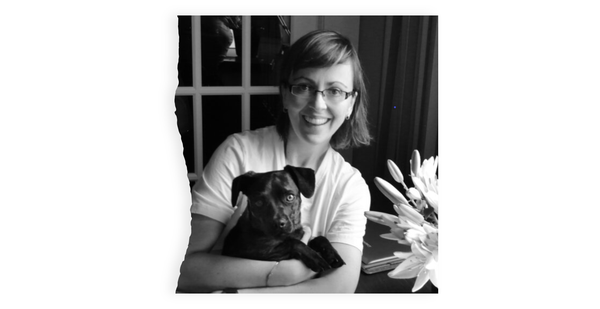
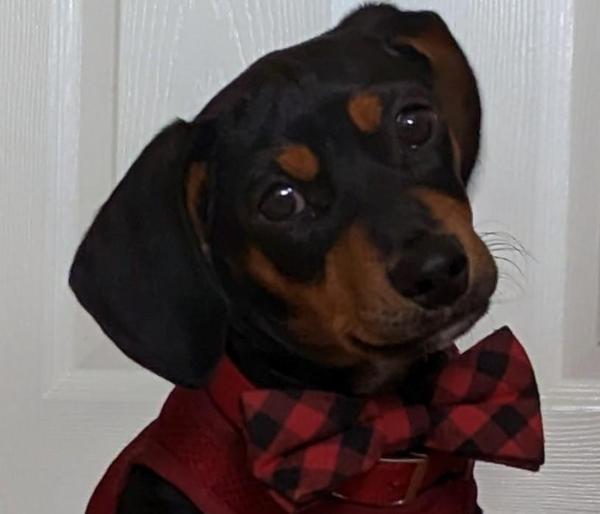
We met little Gomez a month later. He was the only one who gave kisses, and he was the only dog who stared at us the entire time we visited him. He knew we needed him.
We delayed his neutering until he was a year old to give him more exposure to hormones, and hopefully less risk of intervertebral disc disease. Unfortunately, his pre-op lab work before the neutering surgery showed his ALT level was very high. The neutering surgery could not proceed, because Gomez would likely have trouble waking up from the anesthetic.
Our vet explained it might be a birth defect that dachshunds often have called a portosystemic shunt (PSS). He said they would repeat the lab work in six weeks and see if the levels changed. If the results were still abnormal, he would order a bile test, and a liver ultrasound with biopsies. He also mentioned surgery. We were very alarmed, and of course I read a
lot about PSS and its treatment and prognosis.
I had, at home, Dr. Khalsa's "Natural Dog" book, from when Heffy was with us. Heffy had had colitis which was quite severe, but it had totally resolved once we switched him to homecooked food using Dr. Khalsa's recipes. I immediately contacted
her for a consult for little Gomez.
If there was anything we could do to help him recover from the liver issues and hopefully without surgery, we wanted to do it as soon as possible. She requested his lab results, his vaccination record and asked about his diet. It was interesting that our
vet never mentioned about his diet at all, and yet we were feeding him a raw dehydrated organic food that only their clinic sells. It is fairly expensive at $150 for five pounds, so we thought it was a healthy choice.
Dr. Khalsa had her consultation with me and she had a bunch of suggestions all
centering around changing his diet and lowering the protein from 60% in the food we were feeding him to around 20%. Sweet potatoes, goat cheese, broccoli, and a little bit of kangaroo were in his dish from that day onwards. We also switched his training treats to a lower protein level around 10-15%.
Dr. Khalsa had also suggested dandelion greens. Gomez is very finicky though, and even if the greens were hidden inside some goat cheese, he would sniff and walk away. Plain goat cheese was no problem thankfully. She also suggested no further vaccinations because his liver would never be able to process them.
Six weeks later, Gomez had another blood panel done. His ALT had gone from over 500 to 187 with just the change in diet. The reference range for ALT levels tops out at 125, so 187 was still a bit high.
Dr. Khalsa had suggested that we get the liver
ultrasound performed, yet also cautioned us that the results often depend on how skilled the radiologist is who does the ultrasound.
She had had a little Yorkie patient with high ALT levels who was very symptomatic for liver disease a few years ago. This dog had an ultrasound done at Cornell and
it came back normal, so she sent it to a radiologist she knew was very good for a repeat ultrasound. The microcirculation was clearly visible to the veterinarian she had sent her new patient to. With Dr. Khalsa's treatment suggestions, the Yorkie had totally recovered.
With such a positive
change in ALT levels in such a short time, we decided to wait on the ultrasound for a month or two. Gomez had no symptoms of any PSS whatsoever, so our vet agreed to watch and retest this fall. The third lab test for Gomez was done late last month, and everything is entirely normal.
We are beyond thrilled and so thankful!! To think of all of the testing Gomez might have gone through if we had not reached out to Dr. Khalsa for a consult.
It would have been a lot of torment for him, and a lot of torment for us worrying about him and helping him recover from the
biopsies.
Dr. Khalsa is so knowledgeable and loves her patients. She is a gem!
Many thanks to her and her team for all of their help!